MEP Coordination Plans: Streamlining Your Building's Mechanical, Electrical, and Plumbing Systems
Discover why MEP coordination plans are vital for your house construction. Learn how PlanMyPlot’s online architect India experts streamline mechanical, electrical, and plumbing systems.
Published
March 2, 2026
Reading Time
1 Min Read
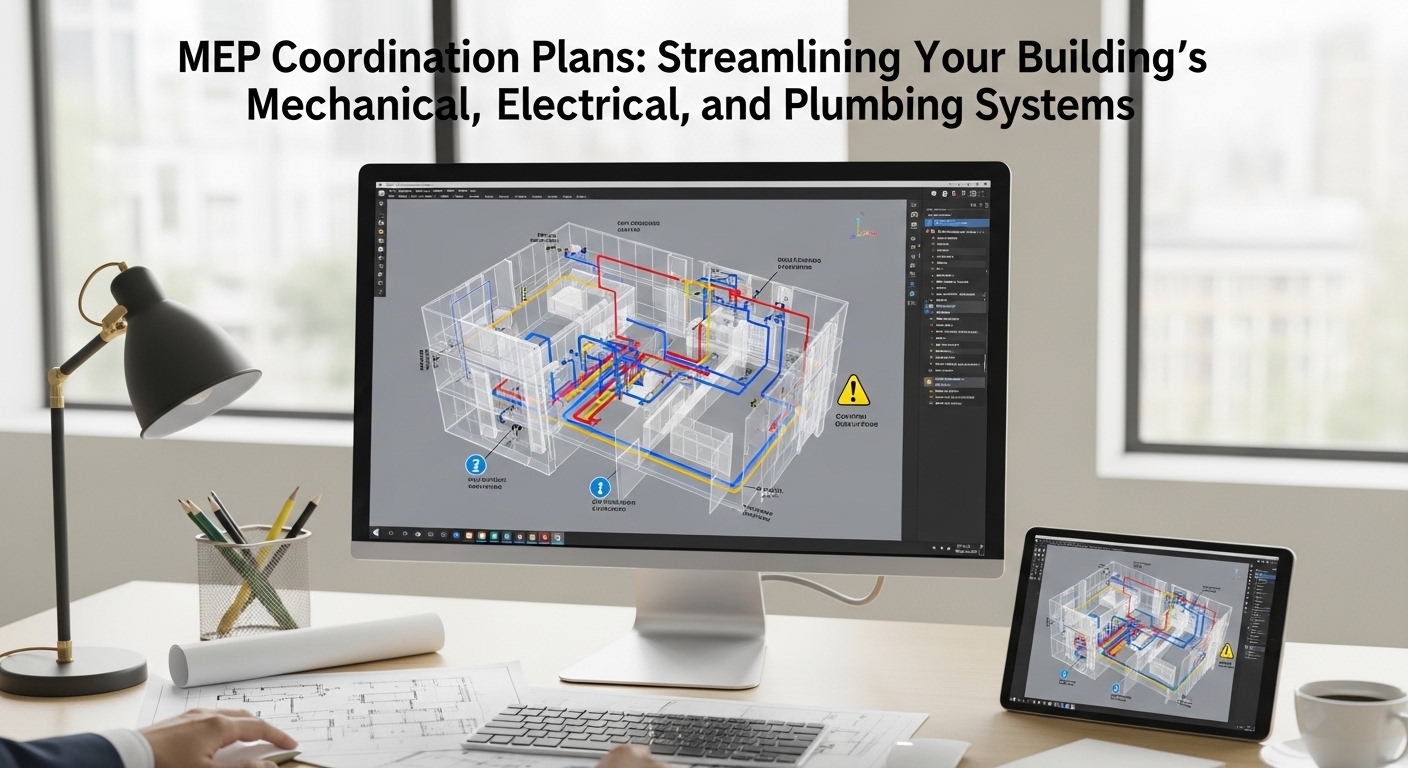
If you compare building a home to the human body, the architectural design is the physical appearance, and the structural engineering is the skeleton. But what makes the body actually function? It is the complex network of veins, arteries, and nerves hidden beneath the surface. In the world of construction, this vital internal network is known as MEP: Mechanical, Electrical, and Plumbing systems.
For homeowners embarking on a new construction journey in Karnataka or anywhere across the country, securing a beautiful house plan design online India is often the top priority. However, the most breathtaking home in the world quickly loses its charm if the air conditioning doesn't cool properly, the water pressure is weak, or the power outlets are constantly tripping. Historically, these systems were figured out "on the fly" by local contractors, leading to chaotic construction sites and expensive rework.
Today, a professional online architect India doesn't just draw the walls; they digitally map out the exact pathways for every wire, duct, and pipe long before the foundation is poured. In this comprehensive guide, we will explore what MEP coordination plans are, why they are the secret to a stress-free build, and how PlanMyPlot meticulously integrates these systems to ensure your dream home functions as flawlessly as it looks.
What Are MEP Coordination Plans?
MEP is an acronym that stands for Mechanical, Electrical, and Plumbing. An MEP coordination plan is a highly detailed, technical blueprint that synchronizes these three critical disciplines within the spatial constraints of your architectural layout.
When you finalize your 2D floor plan design India, the walls, doors, and windows are set. The MEP plan takes that floor plan and overlays the complex utility networks to ensure they don't crash into each other or compromise the building's structural integrity.
- Mechanical:In residential construction, this primarily refers to HVAC (Heating, Ventilation, and Air Conditioning).It involves planning the ductwork, exhaust systems for kitchens and bathrooms, and ensuring optimal indoor air quality.
- Electrical: This covers the entire power grid of your home. It includes the main electrical panel, wiring routes, switchboard placements, lighting fixtures, and provisions for modern smart-home integrations or solar panel connections.
- Plumbing:This involves the complex routing of fresh water supply lines, wastewater drainage, sewage pipes, and rainwater harvesting systems.
At Plan My Plot, we understand that a modern home requires modern utilities. Trying to fit bulky AC ducts and thick plumbing pipes into a finished 3BHK house plan India without a plan is a recipe for disaster. This is why we strongly encourage homeowners to secure our comprehensive MEP (Mechanical, Electrical, Plumbing) Plans as a core part of their pre-construction package.
The Cost of Ignoring MEP in Your House Plan
What happens if you skip the MEP coordination phase and leave it up to the on-site contractors to figure out? You open the door to what the industry calls "clashes."
A clash occurs when two different utility systems try to occupy the exact same physical space. For example, the plumber might run a large drainage pipe straight through the area where the electrician planned to install the main distribution board. According to standards and insights from the Indian Society of Heating, Refrigerating and Air Conditioning Engineers (ISHRAE), improper planning of mechanical and ventilation routes is one of the leading causes of post-construction structural modifications and indoor comfort issues.
1. The Nightmare of On-Site Rework
If clashes are discovered during construction, the work stops. The contractors must dismantle the conflicting systems, break newly built walls or concrete slabs, and reroute the pipes or wires. This not only wastes expensive materials but causes massive delays to your timeline.
2. Compromising the Architecture
If an AC duct cannot fit where it was supposed to go, the contractor might suddenly have to lower your ceiling height to hide it. What was originally designed as a spacious, airy 2BHK house plan India suddenly feels cramped and claustrophobic. By utilizing an expert online architect India, these spatial conflicts are identified and resolved digitally. We adjust the ducting or the pipe routing on our screens, protecting the integrity of your ceiling heights and room dimensions.
3. Safety Hazards
Improperly routed electrical wires placed too close to uninsulated plumbing pipes create severe fire and shock hazards. A precise MEP plan ensures strict adherence to safety codes, keeping water and electricity safely separated within the wall cavities.
Integrating MEP with Aesthetics and Vastu
A common misconception is that highly technical utility plans must inherently ruin the aesthetics of a home. At PlanMyPlot, our philosophy is that good engineering should be completely invisible to the homeowner.
Seamlessly Blending with Your 3D Elevation
When you invest in a breathtaking 3D elevation design online India, the last thing you want is a massive, ugly plumbing pipe running straight down the center of your beautiful front facade. Because our MEP engineers work collaboratively with our architectural designers, we strategically design concealed "duct shafts." These vertical voids inside the building hide all the unsightly pipes and wires, ensuring your exterior remains as pristine as the day you approved the 3D render.
Harmonizing Utilities with Vastu Shastra
For homeowners who prioritize a strict vastu house plan design, MEP coordination becomes even more complex—and even more necessary. Vastu principles often dictate very specific placements for utility elements. For instance:
- Overhead water tanks must often be placed in the South-West.
- Underground sumps or borewells are typically favored in the North-East.
- The main electrical meter board (representing fire/heat) is usually placed in the South-East.
If you are building on a constrained 30x40 house plan, routing the plumbing from the North-East sump all the way to a South-West overhead tank requires brilliant engineering. Plan My Plot seamlessly aligns these Vastu requirements with optimal MEP routing, ensuring you don't have to choose between traditional beliefs and modern water pressure.
You can learn more about how we seamlessly integrate all these complex layers by visiting our How It Works page.
[Image placeholder: A split image showing an architect's tablet displaying an electrical layout plan next to a beautifully lit modern living room, demonstrating how planning translates to flawless execution. Alt Text: Integrating lighting and electrical layouts with a modern 2BHK house plan India.]
Frequently Asked Questions (FAQs)
1. Do I really need an MEP plan for a standard, compact 30x40 house plan? Absolutely. In fact, MEP coordination is often more critical for smaller plots. In a sprawling estate, there is plenty of room to route pipes and wires. In a compact 30x40 house plan (which offers around 1200 sq. ft. per floor), wall space and ceiling cavities are highly limited. A precise MEP layout ensures that your 2BHK house plan India or 3BHK layout doesn't lose valuable square footage to bulky, poorly planned utility ducts.
2. How does an online architect India coordinate MEP systems without visiting the site? The coordination happens within the advanced CAD and BIM (Building Information Modeling) software we use to design your home. Once the 2D floor plan design India and structural columns are finalized digitally, our MEP engineers draw the utility lines directly into that same digital model. The software automatically flags any physical "clashes" (e.g., a pipe hitting a beam), allowing us to reroute the system on our computers long before the physical construction begins.
3. When should I hand the MEP plans over to my local contractor? The MEP plans should be handed over alongside your architectural and structural blueprints before any construction begins. The contractor needs to know where to leave "sleeves" (holes) in the concrete foundation and beams for pipes to pass through later. You can access these comprehensive, execution-ready bundles through our Working / Execution Drawings service, ensuring your on-site team has every technical detail from day one.
Conclusion: Build a Home That Works Perfectly from the Inside Out
A beautifully designed house is a joy to look at, but a brilliantly engineered house is a joy to live in. While the visual excitement of a house plan design online India captures our imagination, it is the silent, hidden MEP systems that provide the daily comfort, safety, and convenience we rely on.
Leaving the routing of your mechanical, electrical, and plumbing systems to chance or on-site guesswork guarantees expensive rework, architectural compromises, and future maintenance nightmares. By prioritizing an MEP coordination plan alongside your vastu house plan design and structural drawings, you secure total control over your construction project.
PlanMyPlot is committed to delivering homes that are as technically flawless as they are aesthetically beautiful. Whether you are maximizing a standard 30x40 house plan or designing a luxurious, multi-story 3BHK house plan India, our expert team maps out every wire, pipe, and duct to ensure a seamless, stress-free build.
Are you ready to build a home that functions flawlessly from day one? Don't let uncoordinated utilities derail your dream project. Explore our comprehensive Services today, or contact Plan My Plot to ensure your home's internal systems are engineered for perfection!